

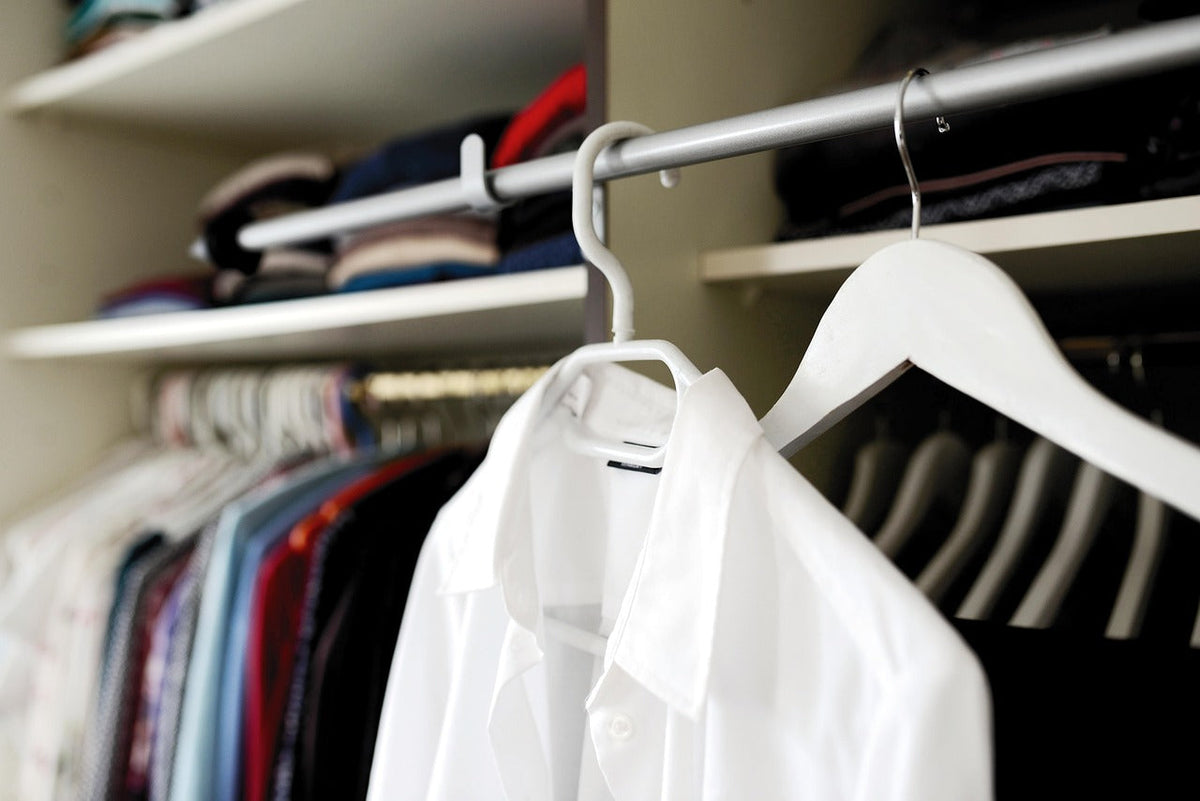
How to build a sustainable wardrobe: 3 tips for buying less and dressing better
How many clothes do we have in our closets that we never wear? How many purchases have we made on impulse, drawn in by a good price or a passing trend, only to forget about them after a few weeks?
Our wardrobe says a lot about our consumption habits. We often buy more than we really need, accumulate similar items, and end up wearing the same clothes all the time, leaving the rest unused.
This behavior comes at a cost that goes far beyond the financial.
The fashion industry is characterized by growing clothing production and increasingly rapid consumption cycles. So-called fast fashion gets us used to seeing clothes as temporary products, to be constantly replaced to keep up with new trends.
But do we really need so many clothes to keep changing our look and find something to wear?
The answer is no.
A sustainable wardrobe isn't built by constantly buying new eco-friendly clothes, but by first learning to make better use of what we already own.
It's not about giving up shopping or the pleasure of getting dressed, but about changing your perspective: buying less, choosing carefully, and giving each item more value.
Here are 3 practical tips for building a more mindful and sustainable wardrobe.
👗 1. TAKE INVENTORY OF YOUR WARDROBE
Before buying something new, take a moment to look at what you already have.
It might seem like an obvious suggestion, but how often do we buy an item that looks a lot like something we already own? Or completely forget about a dress we bought a few seasons ago, simply because it ended up at the back of the closet?
Taking stock of your wardrobe is the first step toward avoiding unnecessary purchases and rediscovering what you already have.
Set aside a few hours to go through your clothes, sorting them by type: trousers, skirts, shirts, sweaters, dresses, jackets, and so on.
For each item, try asking yourself:
-
Do I still wear it?
-
Do I really like it, and does it make me feel comfortable?
-
Can I easily pair it with other clothes?
-
Is it still in good condition?
-
Could it do with a few minor alterations?
You might be surprised to discover how many different outfits you can create simply by combining the clothes you own in new ways.
Not everything you don't wear has to be thrown away.
A pair of pants with a hem that needs fixing, a shirt missing a button, or a dress that needs a small alteration can all become perfectly wearable again.
For items you no longer want, you can consider several alternatives: sell, swap, give them away, or donate them to someone who could use them.
L’important thing is not to automatically consider an unused garment as waste.
🌱 A fun fact: how much clothing do we consume?
According to the European Environment Agency, in 2022 each European citizen consumed an average of 19 kg of textile products, including clothing, footwear, and home textiles.
Of this, 8 kg consisted of clothing.
This is an increase compared with the total of 17 kg in 2019.
These figures show how important it is to rethink our relationship with shopping and learn to make what we already own last longer.
Source: European Environment Agency (EEA), Circularity of the EU textiles value chain in numbers.
📝 2. PLAN YOUR LOOKS AND SET A SEASONAL BUDGET
How many times have you bought a dress because it was on sale, because you particularly liked it, or because you’d seen someone else wearing it, without really knowing how you could style it?
Impulse buying is one of the main enemies of a mindful wardrobe.
We often buy a single item without thinking about the rest of our wardrobe, ending up with clothes that are difficult to pair and that we hardly ever wear.
Another option is to start planning your outfits before making new purchases.
How?
1. Think about the looks you’d like to wear.
Imagine which outfits you’d like to have available next season. Think about the different occasions in your everyday life: work, free time, outings with friends, events, and special occasions.
You can also create a small collection of inspiration with photos, outfit combinations, and colors you like.
2. Try creating outfits with what you already own.
Try combining your clothes in different ways. You may find that you don’t need to buy a whole outfit to create a new look, but only add a single item.
3. Identify what you’re really missing.
Once you’ve decided on your looks, make a list of the items you need to complete them. Avoid buying duplicates and choose versatile pieces that can be worn in different combinations.
4. Set a seasonal budget.
Decide in advance how much you want to spend on clothes for the season. Having a spending limit helps you weigh your priorities more carefully and avoid constantly being tempted by new trends.
💡 A little trick to avoid impulse buying
When you find something you like, don’t buy it right away. Add it to your wish list and wait at least 48 hours before deciding.
In the meantime, ask yourself: do I really need it? What items I own can I pair it with? Will I wear it next season too?
If, after thinking it over, you still believe it’s a useful purchase, you can make your decision with greater confidence.
Remember: the number of clothes you own doesn’t determine how many outfits you can create, but how you learn to put them together does.
🌾 3. CHOOSE QUALITY OVER QUANTITY
This is probably the most important tip.
We’re used to finding clothes at ever-lower prices, but rarely stop to think about how much a garment will actually cost us over time.
A dress bought at a very affordable price may seem like a bargain, but if it loses its shape, gets damaged, or we stop liking it after just a few wears, how good a deal was it really?
By contrast, a garment made with durable materials, good construction, and special attention to detail can last for many seasons.
The difference isn’t just in the initial price, but in the value a product manages to retain over time.
📊 Cost per wear: a different way to evaluate a purchase.
There’s a simple way to help us figure out how good value a garment is: the cost per wear, also known as cost per wear.
It’s calculated by dividing the purchase price by the number of times we expect to wear that garment.
Let’s look at an example:
-
A €30 dress worn just twice costs €15 per wear.
-
A €120 dress worn 60 times costs €2 per wear.
Of course, this is a simplified example, but it illustrates the point: a higher initial price doesn’t necessarily mean spending more in the long run.
But be careful: quality doesn’t simply mean a high price.
Spending more isn’t enough to ensure you’re buying a better or more sustainable product.
It’s important to learn to look for a few things:
▸ Material quality: find out about the fabric composition and the characteristics of the fibers used.
▸ The construction: check the stitching, finishing, quality of the fastenings, and attention to detail.
▸ Fit: choose clothes that fit your body and make you feel good, without constantly chasing sizes or trends.
▸ Versatility: choose clothes you can easily pair with other pieces and wear for different occasions.
▸ Repairability: a garment that can be mended, altered, or adjusted is more likely to accompany you over time.
Composition also deserves special attention. Choosing natural-origin fibers, such as cotton, linen, hemp, and wool, can be an important criterion when making a choice, especially if you want to reduce reliance on synthetic fibers derived from petrochemicals.
Of course, natural fibers also have an environmental footprint linked to cultivation, processing, and production. That’s why it’s important to consider a product’s entire life cycle and, above all, use it for a long time.
True sustainability isn’t simply about buying something different, but about changing how we buy and use clothes.
🤍 A MORE CONSCIOUS WARDROBE, MORE SUSTAINABLE FASHION
Taking inventory of our clothes, planning outfits, and choosing quality over quantity are three simple habits that can profoundly change our relationship with fashion.
We don’t necessarily have to give up the pleasure of buying something new. We need to learn to do it more consciously.
Because every purchase is a choice: we can keep fueling a model based on constant production and consumption, or start valuing more the products we choose to bring into our closets.
At Malìa Lab, we’ve believed in a different kind of fashion since 2016.
We make women’s clothing from natural-origin fibers, handcrafted in Calabria and made to order.
We don’t chase passing trends; we design garments made to be worn for years, celebrating every woman’s shape and individuality.
We believe dressing well doesn’t mean having a full closet, but finding something in every garment that truly represents us.
👗 Choose less, choose better, choose what represents you.
👉 Discover the Malìa Lab collection and build a more conscious wardrobe.
📲 Message us on WhatsApp for a free consultation.
📸 Follow us on Instagram: @malialab_official
💚 Because the most sustainable garment is also the one you’ll love wearing for a long time.

Leave a comment
All comments are moderated before being published.
This site is protected by hCaptcha and the hCaptcha Privacy Policy and Terms of Service apply.