



3 tips for a sustainable lifestyle: small actions, big changes
Adopting a sustainable lifestyle doesn't mean completely changing your habits overnight. First and foremost, it means becoming more aware of the consequences of our everyday choices.
Every product we buy, every resource we consume, and every piece of waste we produce has an impact on the environment. We often don't realize it because the consequences of our actions are distant in time and space, but that doesn't mean they don't exist.
The first rule is fairly intuitive: reduce waste and limit the consumption of natural resources, starting with water and energy. But sustainability doesn't end there. It also concerns how we shop, the products we choose, and our relationship with the environment around us.
You don't necessarily need to make major investments or radical changes. There are simple habits we can introduce into our daily lives which, if adopted by more and more people, can help reduce our environmental impact.
Here are 3 practical tips to start living more sustainably.
🌱 1. CHOOSE LOCAL, SEASONAL PRODUCTS AND MORE RESPONSIBLE SUPPLY CHAINS
Next time you go shopping, try asking yourself not only how much a product costs, but also where it comes from, how it was made, and what journey it took before reaching your cart.
Choosing local markets, small producers, and Solidarity Purchasing Groups (GAS) is a good place to start.
Buying local products makes it easier to find out where food comes from, supports the work of local producers and, in many cases, reduces the number of steps in the supply chain.
Another key factor is seasonality.
Choosing seasonal fruit and vegetables means respecting natural growing cycles and favoring foods that do not necessarily require out-of-season cultivation, long-term storage, or special production conditions.
But keep in mind: zero-mile food does not automatically mean a lower environmental impact.
The distance food travels is just one factor to consider. Growing methods, the energy used in greenhouses, storage methods and the type of transport also contribute to a product's environmental footprint.
The most informed choice is therefore to consider origin, seasonality and production methods together.
📊 Another figure not to overlook: food waste.
According to Eurostat, around 129 kg of food waste per inhabitant was generated in the European Union in 2024. No less than 69 kg of that came from households.
This means that a considerable amount of waste is generated right in our own homes.
To help reduce it, we can adopt a few simple habits:
-
Shop with a list, buying only what you need.
-
Plan weekly meals to avoid unnecessary purchases.
-
Store food properly and follow the storage instructions.
-
Reuse leftovers instead of throwing away food that is still good to eat.
Remember: buying better is important, but avoiding waste from things we have already bought is just as important.
Source: Eurostat, Food waste in the EU, 2024 data.
♻️ 2. REDUCE PACKAGING AND GIVE UP SINGLE-USE PLASTIC
Bottles, bags, food packaging, cups and disposable containers. Many of the things we use every day have a very short lifespan, but require resources to produce and become waste immediately after use.
The problem is not just plastic ending up in the environment. Producing packaging requires raw materials, energy and water, while disposing of it uses additional resources.
The LEuropean Union has identified reducing packaging, reuse and recycling as some of the key strategies for promoting a more circular economy.
But where can we start?
The first thing to do is avoid unnecessary packaging whenever possible and choose loose products or those with less packaging.
We can also adopt some very simple habits:
-
Use a reusable shopping bag instead of constantly buying bags.
-
Choose a reusable water bottle instead of single-use bottles.
-
Use reusable containers to store and transport food.
-
Choose refillable products or products with refill systems.
-
When packaging is necessary, choose minimal, easily recyclable packaging.
An important note: eliminating all packaging isn't always the most sustainable choice. In some cases, packaging protects the product and extends its shelf life, preventing it from going to waste. L's goal isn't to indiscriminately eliminate every material, but to reduce unnecessary materials and prioritize reuse.
You don't even need to buy lots of new accessories to live more sustainably. A bag you already own, an old reusable bottle, or a repurposed container can do the job perfectly well.
Often, the best solution is simply to reuse what we already have.
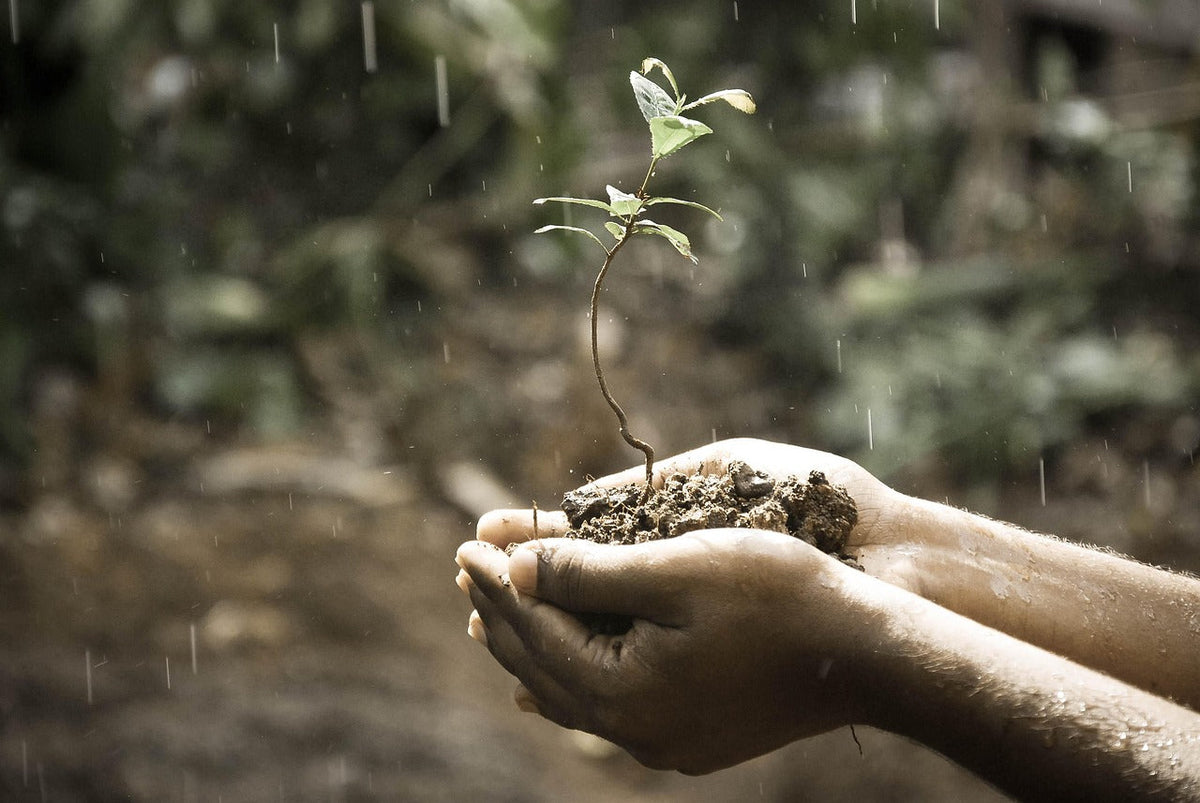
🌳 3. PLANT A TREE OR CREATE A SMALL GREEN SPACE
Don't have a garden? No problem. Even a balcony, a terrace, or a simple windowsill can become a small green space.
Planting a tree, growing flowers, or caring for a few plants may seem insignificant compared to major environmental problems, but vegetation plays an essential role in maintaining ecosystem balance.
Trees, in particular, absorb carbon dioxide as they grow, help improve air quality, provide shelter for various animal species, and help regulate temperatures in urban areas.
🌍 The value of green spaces isn't just about CO₂.
According to ISPRA, urban vegetation helps combat heat islands through shade and evapotranspiration. Trees and green spaces also help absorb some air pollutants, promote rainwater absorption, and contribute to biodiversity conservation.
You don't need a lot of space to make a real difference.
You can start like this:
-
Grow aromatic plants on your balcony or windowsill.
-
Choose local flowers and plants that provide food for pollinating insects.
-
Choose native species, which are better suited to the area's climate.
-
Take part in local tree-planting and public green-space care initiatives.
Of course, a small potted plant can’t offset one person’s emissions. Its value lies in contributing, even on a small scale, to vegetation and biodiversity in the places where we live.
And if you can plant a tree, choose a species suited to the climate and available space: caring for it over time is just as important as planting it.
Sources: ISPRA, Restoration of Urban Ecosystems; FAO, Urban and Peri-Urban Forestry.
🤍 SUSTAINABILITY STARTS WITH OUR CHOICES
Buying products more consciously, reducing packaging, avoiding waste, and caring for green spaces are things everyone can do.
There’s no single action that can solve environmental problems, just as there’s no completely impact-free lifestyle. What we can do is gradually reduce our environmental footprint by learning to recognize the consequences of our habits.
Sustainability shouldn’t be a passing trend, but a principle that guides our decisions every day.
And this applies to what we wear, too.
👗 YOUR WARDROBE CAN MAKE A DIFFERENCE TOO
L’industria della moda è una delle realtà in cui le nostre scelte di consumo possono avere un peso importante.
Choosing garments made to last, crafted from natural-origin fibers and made by hand, means starting to look at clothing from a different perspective: no longer buying continuously to follow trends, but choosing what we truly want to wear.
At Malìa Lab, we’ve believed in this principle since 2016.
We create women’s clothing from natural-origin fibers, handcrafted in Calabria to order and designed to adapt to every woman’s shape and individuality.
Because choosing more conscious fashion also means learning to buy less, choose better, and value what we wear.
👉 Discover the Malìa Lab collection and choose more conscious fashion.
📲 Message us on WhatsApp for a free consultation.
📸 Follow us on Instagram: @malialab_official
💚 Sustainability isn’t a one-time choice. It’s a habit we build every day.


Leave a comment
All comments are moderated before being published.
This site is protected by hCaptcha and the hCaptcha Privacy Policy and Terms of Service apply.